
Can Non-Christians Be Saved?
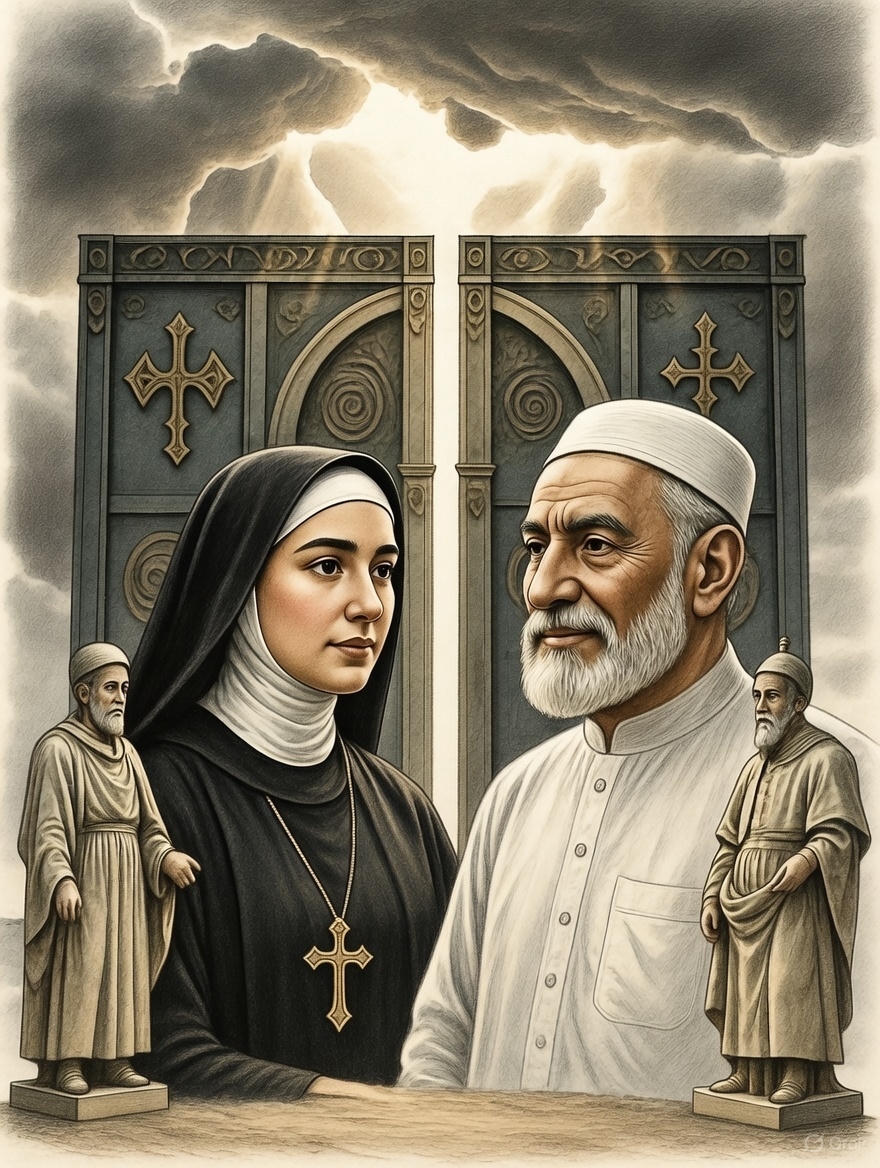
Imagine two souls at eternity’s door.
Maria: a devoted Catholic nun, steeped in sacraments and prayer. Her way feels secure.
Ahmed: a kind Muslim humanitarian who’s never heard the Gospel. He serves the poor, prays deeply, and follows his conscience fiercely.
Is heaven barred to him just because of where he was born?
This is the classic Catholic “paradox” on salvation. The Church insists there’s no salvation outside her—yet holds genuine hope for people like Ahmed.
Summarize at:
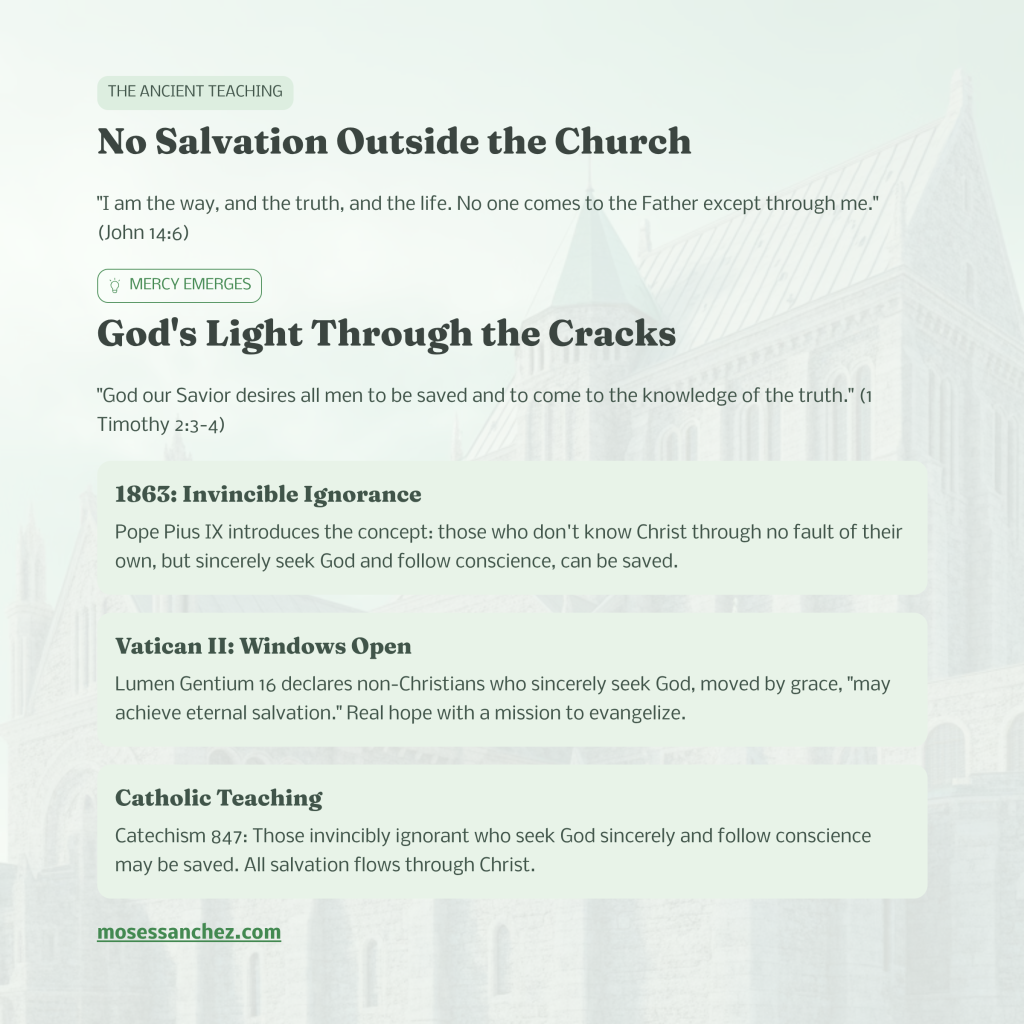
The Ancient Fortress: "No Salvation Outside the Church"
“I am the way, and the truth, and the life. No one comes to the Father except through me.” (John 14:6)
Jesus’ words are uncompromising—one way to the Father.
Think of the early Church as Noah’s Ark in a deadly flood. In the 3rd century, during some of the darkest times for Christians, St. Cyprian declared: “Extra Ecclesiam nulla salus”—no salvation outside the Church. It was the only refuge.
Popes and councils reinforced it. In 1302, Boniface VIII said submission to the Pope is necessary for salvation. The 1442 Council of Florence was blunt: no hope for those who knowingly reject the Church.
These were safeguards against heresy and schism in turbulent times, aimed at people who knew the faith but turned away.
Cracks Appear: Mercy for the Innocent
“God our Savior… desires all men to be saved and to come to the knowledge of the truth.” (1 Timothy 2:3-4)
God wants everyone saved—yet not everyone knows the truth.
But what about someone who never gets the invitation?
Popes started addressing this. In 1863, Pius IX spoke of “invincible ignorance.” If you don’t know Christ or the Church through no fault of your own—but you sincerely seek God, live by your conscience, and follow the light you have—you can still be saved.
It’s often called an implicit baptism of desire: unseen grace honoring your heartfelt longing.
Pius XII echoed this later. The fortress is solid, but God’s mercy shines through hidden cracks.
Summarize at:
Vatican II kicks open the castle windows
“The Gentiles are coheirs, members of the same body, and copartners in the promise in Christ Jesus through the gospel.” (Ephesians 3:6)
Grace extends beyond visible borders.
The 1960s brought big questions. Billions live outside Christianity—what now?
Vatican II didn’t scrap the old teaching. It clarified it beautifully in Lumen Gentium 16:
Non-Christians who sincerely seek God, moved by grace, and try to follow their conscience “may achieve eternal salvation.”
Real hope! But there’s a sharp warning too: People are often “deceived by the Evil One,” falling into error. That’s why the Church must evangelize—it’s a rescue mission, not optional.
Summarize at:
Today's Clear Voice: Dominus Iesus and the Catechism
“For there is one God, and there is one mediator between God and men, the man Christ Jesus.” (1 Timothy 2:5)
One Mediator—no detours around Him.
The Catechism (CCC 846-848) sums it up: All salvation comes through Christ and His Church.
Yet those invincibly ignorant, who seek God sincerely “with a sincere heart, and, moved by grace, try in their actions to do his will as they know it through the dictates of their conscience… may be saved” (CCC 847).
In 2000, Dominus Iesus nailed it: Jesus is the only Savior. Other religions have truths that prepare for the Gospel, but they’re not separate roads. Any salvation outside visible Christianity still flows through Christ.
Resolving the Paradox: One Way, With God's Extraordinary Paths
“For ‘whoever calls on the name of the Lord shall be saved.’ How then shall they call on him in whom they have not believed?” (Romans 10:13-14)
Salvation is offered to all—but faith (even implicit) and grace are needed.
Here’s the key—think of it as a GPS to one destination: Christ and His Church.
The ordinary route? The word comes from Latin ordinarius (‘according to order’), so it means the normal, God-intended way: explicit faith, baptism, and life in the sacraments.
But God isn’t limited. For the truly ignorant, grace can guide them invisibly along extraordinary paths. Their salvation still comes from Jesus, linking them mysteriously to the Church.
It’s not “all religions are equal.” This balances rigor with hope.
Why bother evangelizing? Because that’s what love does. In our wired world, pure ignorance is rare. Sharing the full truth is the greatest kindness—like guiding someone from a foggy trail to the bright highway.
Your Invitation to the Journey
Back to Maria and Ahmed. One walks the open road; the other might follow a hidden one, lit by unseen grace.
The paradox isn’t a dodge—it’s mercy that ignites mission. The Church isn’t a VIP club. She’s the heart pumping Christ’s life outward.
So, where are you on the path? Seeking? Inside?
God’s calling deeper.
Let’s walk it together.


